
Fact summary
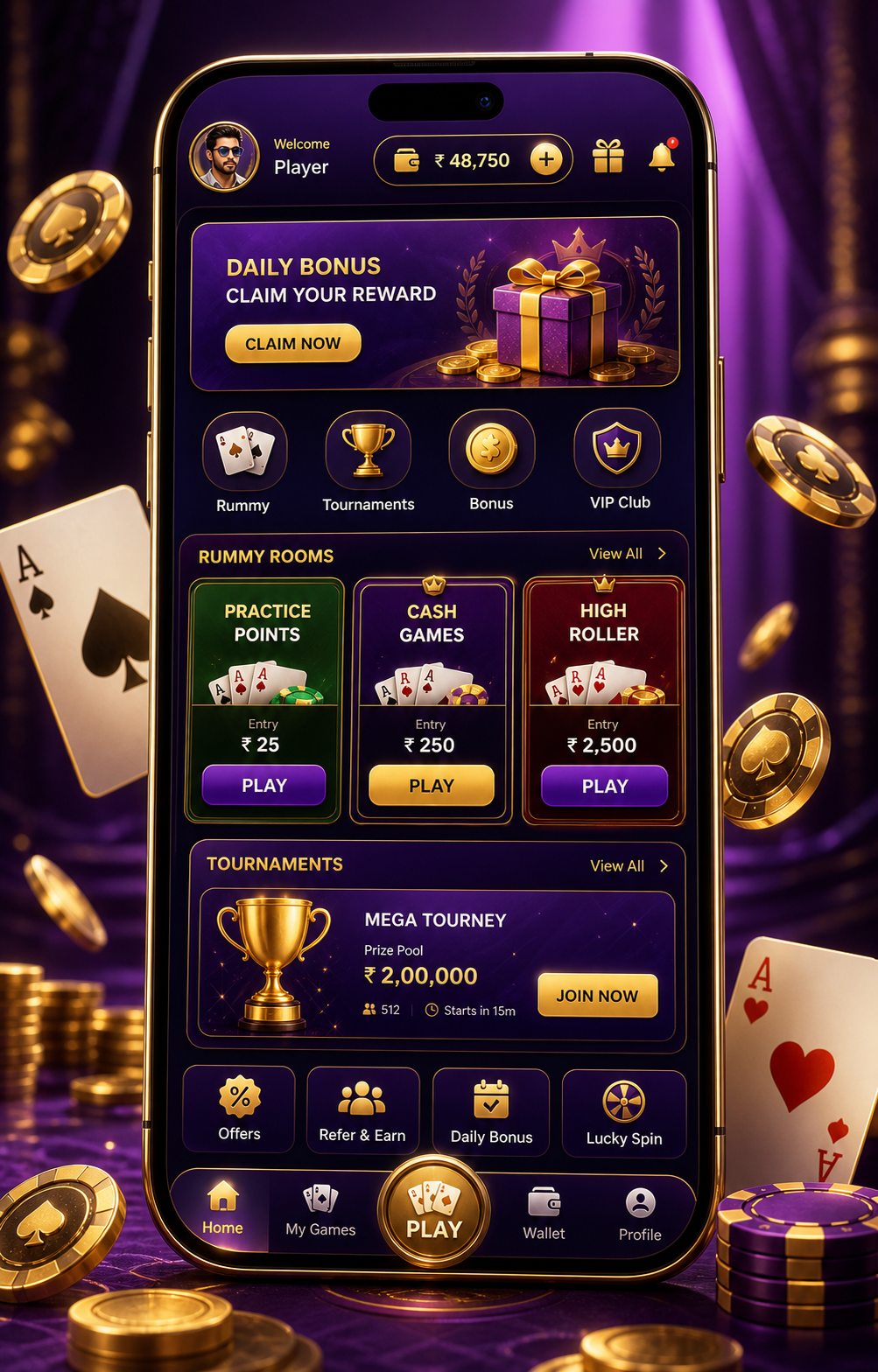
Rummy Noble Games provides calm screen notes for adults in India who need to read rummy-style displays without rushing. The visible focus is on room labels, card groups, timer pressure, login prompts, tournament cards, play limits and safer choices. The central rule-reading problem is easy to miss: a hand or card group can carry the same everyday name while its meaning changes with the rules shown for that table.
A sequence, set, discard or table prompt should therefore be read as a screen description first, not as an automatic result. A familiar-looking group may be treated differently by another ruleset, room type or table instruction. The page does not operate paid play and does not provide account access, money handling or result promises. Its useful role is to help adults pause, compare visible information and decide whether to continue reading.
First observation: the name is not the whole rule
Card language is often shortened on a busy screen. A label may identify a card group, while the table information determines how that group is treated. The same group may be recognised as a sequence in one setting but may need a different condition before it matters. A set may look complete to a reader but still require a particular arrangement under the table’s instructions. A discard may be a card no longer held, or it may also be part of the information used to understand the current table state.
This is why a reader should not decide from colour, shine or the apparent order of the cards. The correct question is not simply, “Does this look familiar?” It is, “What does this table say this group means, and what action is being considered?” If that answer is not visible, a pause is more useful than a guess.
How to compare two rule meanings
A practical comparison can be made in a fixed order. Start with the room label and the visible table prompt. Then separate the cards into sequence, set and discard groups. Finally, check whether the screen gives any instruction that changes how those groups should be read. This order keeps the card pattern from taking over before the surrounding rule information has been noticed.
- Name the group without judging it. Write down whether the cards appear to be a sequence, a set, a discard or an unresolved table prompt.
- Read the room information. Check the room type and entry label before treating the group as useful, complete or ready for an action.
- Look for a rule difference. Compare the visible table instruction with the meaning you normally attach to the group.
- Check the clock. A timer cue can narrow attention. Read the group again after the first rush has passed.
- Stop at uncertainty. If the name and the table instruction do not agree, do not fill the gap with memory or assumption.
This method does not predict an outcome. It simply reduces the chance of confusing a familiar card pattern with a confirmed rule position.
A hypothetical hand with two possible readings
Consider a clearly hypothetical hand containing cards that appear to form one sequence and another group that appears to be a set. In one rule setting, the sequence may be the part the reader needs to identify first, while the second group may remain only a possible set until the table condition is checked. In a different setting, the same visible groups may be assessed through another requirement shown by the table prompt.
The important point is not which interpretation produces a better result. No real hand, room or outcome is being reported here. The example shows why a screen reader should record the visible group, the room information and the table instruction separately. If the screen makes the group look complete but does not make its treatment clear, the correct note is unresolved, not confirmed.
A similar issue can arise with a discard. A reader may see a card outside the current group and assume that it has no further relevance. Yet the table display may use the discard area to communicate the current state. Treating every visible card as part of the hand can create one mistake; ignoring every discarded card can create another. The safe reading is to identify its location and role before drawing a conclusion.
Why room changes deserve a fresh reading
A new table, a different card group or a sudden prompt should be treated as a fresh decision rather than a continuation of the previous one. Habit is particularly unreliable when two rooms use similar visual styling but attach different meanings to familiar terms. The purple and gold appearance may attract attention, but colour does not establish a rule.
Before continuing after a room change, repeat the room-first check. Read the room label, note the entry label, sort the visible cards and identify any timer cue. If a login prompt appears, check whether it asks for access details, a one-time code or a repeated prompt. These are reading cues, not proof that access should be supplied.
The same pause applies to tournament cards. Compare the visible start time, table type, seat count and terms before reacting. A tournament card may look urgent because it is bright or prominent, but its presentation does not explain every rule difference. If a field is missing or unclear, leave the interpretation open rather than inventing a condition.
Evidence notes for a calmer screen check
Rummy Noble Games presents four screen areas that adults can misread: login cues, tournament cards, feature panels and ordinary card groups. These areas should be treated as visual anchors for inspection, not as invitations to play. A bright feature panel can place several prompts together, making a familiar card name appear more decisive than it is.
Use a short written record when the display feels crowded:
- Room: the room type and entry label that are visible.
- Cards: the groups that appear to be sequences, sets or discards.
- Prompt: the table instruction or unresolved message.
- Clock: any timer cue that may be creating pressure.
- Boundary: the time and spending limit decided before opening a rummy-style screen.
This record is deliberately modest. It does not claim to identify a winning hand, calculate a return or confirm a result. It provides a way to compare what is actually visible with what the reader assumes from previous experience.
Common misreadings to avoid
Same name, same treatment. A group called a sequence or set should not be treated as universally valid without checking the table information.
Colour proves structure. Card colour, shine or position can help the eye locate a group, but it cannot decide its rule meaning.
A quick prompt is a clear prompt. Short wording may leave out the condition that matters. Read the surrounding room and table information before acting.
A previous table controls the next one. A room switch or new card group resets the reading process.
Time pressure improves judgement. A timer cue can make a reader overlook the difference between a displayed group and a confirmed rule position.
Related reading and practical limit
For a broader view of boundaries while reading rummy-style displays, see Adult Rummy Screen Notes in India: Table Limits and Risk Boundaries. The article Adult Rummy Notes in India: When One Hand Means Different Things is also relevant to the problem of attaching too much meaning to one visible hand.
The method has a clear limitation: it cannot settle a rule difference when the relevant table instruction is absent, unclear or outside the visible screen. It also cannot replace the rules supplied for a particular setting. When the group name, room label and table prompt do not align, the responsible choice is to pause, avoid guessing and step away if the uncertainty continues.
Keep the final check simple: read the room, separate the cards, compare the rule cue, notice the clock and keep the personal limit in mind. A familiar hand is only a starting description. Its meaning belongs to the rules and information shown around it.
Responsible entertainment note: This article is for screen reading and risk awareness only. It does not provide betting advice, account service, payment handling, outcome prediction or any guaranteed result.