
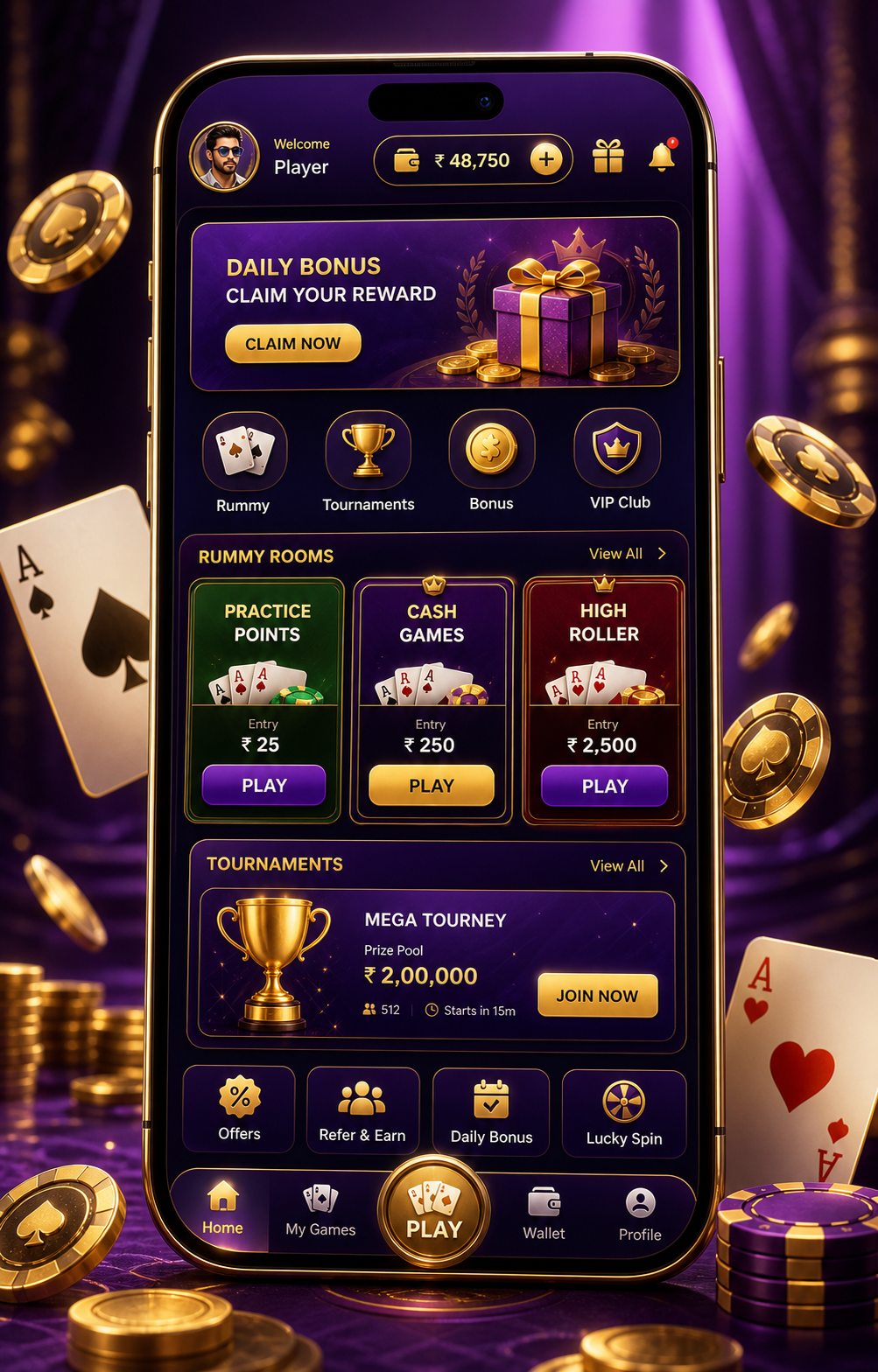
Fact summary: Rummy Noble Games provides calm screen notes for adults in India who want to read rummy-style displays without rushing. The visible focus is on room labels, card groups, timer pressure, login cues, tournament cards, play limits and safer choices. The site does not operate paid play, provide account access, handle money or promise results. A useful way to apply these notes is to replay a hand step by step, separating what was visible from what was assumed.
Start with the screen, not the outcome
A completed hand can make an earlier decision look obvious. That is a common misreading. The final card arrangement is visible after the action has finished, while the person making the decision had to work with an earlier screen, a limited view and possibly a changing timer cue. A careful review should therefore begin with the first clear screen state, not with the result.
Record only the information that can be seen or reasonably identified from the display. Note the room label, the visible card groups, the discard area, the table prompt and any timer pressure. If a login prompt, room switch or bright action prompt appeared, mark that as a separate pause point. Do not fill missing information with a guess about what another person held or what the next card might have been.
This order supports a calmer reading habit:
- Identify the room and its visible context.
- Separate sequence, set, discard and table prompt.
- Read the action cue without allowing colour or motion to decide for you.
- Notice whether the clock or a bright panel is narrowing attention.
- Mark the point at which the decision changed.
- Review the hand without treating the final result as proof of the earlier choice.
A chronological replay method
A hand can be reviewed as a series of screen states rather than as one large card picture. First, describe the opening view. Was the room label clear? Were the cards easy to separate? Was there a discard visible? Was a table prompt competing for attention? These questions concern screen reading, not prediction.
Next, identify the first change. A new card group, a new discard, a room change or a sudden prompt creates a fresh decision point. It should not automatically be treated as a continuation of the previous decision. Re-read the visible information from the beginning of that point. This prevents an earlier assumption from controlling the rest of the review.
Then check the action order shown by the screen. The exact rules can differ between rummy-style settings, so a display should not be interpreted as if every room uses the same sequence, set requirements or discard treatment. Where the screen does not make the rule clear, record the uncertainty instead of presenting a general rummy habit as a confirmed rule.
Finally, note the exit point. If fatigue, hurry or repeated checking appeared, that is relevant evidence about the decision environment. Leaving or pausing is not a failed result. It is a practical response when the screen is no longer being read clearly.
Hypothetical hand review
The following is a hypothetical hand created only to show the review method. It is not a report of a real room, hand, result or platform screen.
Assume an adult sees three visible groups: a possible sequence, a possible set and a card beside the discard area. A table prompt is also visible, and a timer cue creates pressure. The first review should not ask which card would have produced the best result. It should ask what was actually separated and understood at that moment.
- Opening state: The possible sequence is marked separately from the possible set. The discard is not counted as part of either group merely because it has a similar colour.
- First change: One card is added to the visible hand. The reviewer starts a new line in the record rather than assuming the earlier grouping remains correct.
- Prompt pressure: The table prompt becomes more noticeable while the timer cue remains present. The reviewer records that attention was divided and avoids calling the next action a purely card-based decision.
- Second change: A card is placed in the discard area. The reviewer describes the movement without claiming what another participant intended.
- Decision point: The reviewer asks whether the cards were sorted by sequence, set and discard before any action prompt was considered.
- Closing view: The final groups are compared with the earlier view, but the result is not used to guarantee that a different action would have succeeded.
This replay shows why a card may be misread in more than one way. A card that appears useful to a sequence may also be considered alongside a set. A discard may be treated as evidence when it is only a visible card movement. A timer cue may make a person choose quickly before the groups have been separated. The review should identify these points without claiming a winning line.
How to distinguish evidence from assumption
Use two columns when reviewing a screen. In the first, write visible evidence: room label, card group, discard, table prompt, timer cue and any login prompt. In the second, write interpretation: what a group might represent, what a prompt might require and what remains unclear. Keeping these columns apart reduces the chance that an interpretation will be remembered as a fact.
For card groups, use plain descriptions. A sequence is a group being read in order. A set is a group being read by matching value or another visible relationship. A discard is a card shown in the discard area. A table prompt is an instruction or attention cue presented by the screen. These descriptions help with observation, but they do not establish the complete rules of a particular room.
When the display is unclear, stop the replay at that point. Do not invent an action order, assume a hidden card or infer a rule from decoration. A bright panel may attract attention without explaining its meaning. A repeated prompt may require a login check rather than a card decision. If the screen cannot be understood calmly, leaving it unread is safer than continuing from an uncertain assumption.
Rule differences need a separate note
Rummy-style screens can look similar while using different arrangements, action orders or table information. The visible notes on this site support reading the screen; they do not replace the terms of a particular setting. Before relying on a familiar habit, check whether the displayed room information explains the relevant card groups, action sequence or table prompt.
If a rule is not visible, write “unclear” in the review rather than supplying a standard answer. This is especially important when comparing one room with another. A change in room label, card group or prompt should be treated as a fresh decision. The fact that an earlier screen used one arrangement does not prove that the next screen uses the same arrangement.
For a broader related reading on how one visible hand may be understood differently across settings, see Adult Rummy Screen Notes: Same Hand, Different Rules. For a separate discussion of boundaries around table decisions, see Adult Rummy Screen Notes in India: Table Limits and Risk Boundaries.
Money and time boundaries belong in the replay
A hand review is incomplete if it examines cards but ignores the person’s limits. Decide a time boundary and a spending boundary before opening a rummy-style app screen. The site does not handle money or operate paid play, so any financial decision must be considered independently of these reading notes. Never treat a clear card grouping as evidence of a likely return or a reason to exceed a personal limit.
Login cues also deserve their own line in the record. Check whether the screen asks for access details, a one-time code or a repeated prompt. Do not rush through an access request simply because a timer cue or bright panel is present. If the request is unclear, pause and verify what is being asked before continuing. These notes do not provide account access and should not be read as an instruction to share credentials or codes.
Practical replay checklist
- Write the room label exactly as it is visible.
- List the card groups without merging sequence, set and discard.
- Mark each change in order, including a new prompt or room switch.
- Record timer pressure as a condition, not as proof that a fast action was required.
- Separate visible facts from guesses about hidden cards or intentions.
- Check whether the rule difference is explained by the screen.
- Compare the final view with the earlier view without promising a better result.
- Stop when fatigue, hurry or repeated checking makes the screen harder to read.
Limit of this method
Step-by-step replay can improve attention to room labels, card groups, prompts and pressure, but it cannot reveal hidden information or guarantee an outcome. It also cannot confirm rules that are absent from the visible screen. A hypothetical hand is a learning aid, not evidence of a real result. Keep the review calm, maintain personal time and spending limits, and leave the screen when the decision no longer feels clear.
Responsible entertainment note: This article is for screen reading and risk awareness only. It does not provide betting advice, account service, payment handling, outcome prediction or any guaranteed result.