
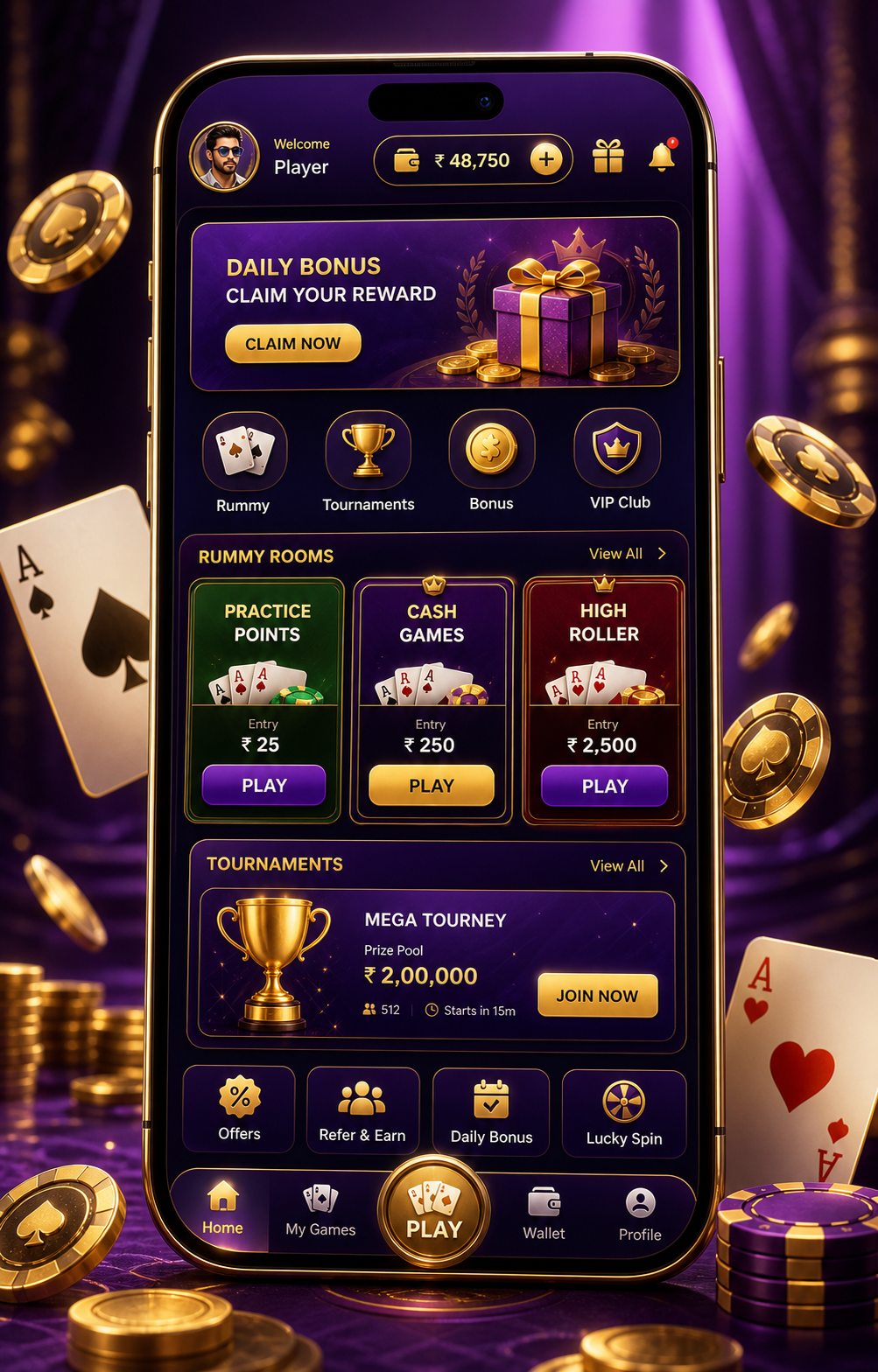
Rummy Noble Games gives adults a quieter way to read rummy-style screens: room labels, login cues, tournament cards, card groups, timer pressure and the moments that call for a pause. No paid play is operated here, and no account access, money handling or result promises are offered. The useful habit is simple: read first, decide second, and keep your own limit in view.
Start with the room, not the cards
A screen often asks for attention in the wrong order. Bright panels, moving cards and quick prompts can pull the eye before the room has been understood. A steadier approach is to begin with the room label, then the visible entry cue, then the card state and any timer signal. That order lowers the chance of treating a fresh table as if it were already familiar.
Practical check: pause for a moment and ask four plain questions in the same order each time: what room is this, what kind of card state is shown, is there a clock or timer cue, and is there any access prompt that needs a slower read?
A sample replay of one hypothetical table
Use this as a hypothetical example only. Imagine a table screen loads and shows a room label, a stack of cards, a timer cue and a tournament-style card beside a login prompt. A rushed reader may focus on the brightest panel first. A calmer reader can review the screen in steps:
- Read the room label and decide whether the table looks like a practice-style room, a competitive room or a mixed screen with several prompts at once.
- Separate the visible card groups in the mind: sequence, set, discard and table prompt. Do not let colour or motion decide the order.
- Check the clock cue. If a timer is visible, treat it as a reason to slow down rather than speed up.
- Look at the login cue last. If the screen asks for access details or repeats a prompt, that is a point to stop and verify before moving further.
This kind of replay does not promise better outcomes. It simply turns a noisy screen into a sequence of checks that is easier to remember.
What to watch when the table changes
Many screen mistakes happen at the moment of change, not during the steady part of the view. A new table, a different card group or a sudden action prompt should be treated as a fresh decision. It is easy to carry over assumptions from the previous screen, but the visual layout may already have changed enough to alter the reading.
When the table changes, reset the order:
- Name the room. Read the label in your head before scanning the cards.
- Sort the cards. Separate sequence, set, discard and prompt.
- Check the clock. Notice whether time pressure is part of the screen.
- Keep the limit. Remember the time and spending boundary you chose before opening the app screen.
How to review a login cue without rushing
Login prompts deserve the same slow read as card layouts. A screen may ask for access details, a one-time code or a repeated prompt. That does not mean action is needed immediately. It only means the screen has moved from viewing to access, and that shift should be recognised before any further step is taken.
Example: if a hypothetical screen switches from a table view to a login prompt after a room change, do not treat the prompt as part of the game itself. It is a separate moment. Read it, compare it, and decide whether it is worth continuing. If the prompt feels unclear, stop and verify rather than guessing.
Tournament cards and feature panels need slower reading
Tournament cards and bright feature panels are often designed to stand out. That is exactly why they can be misread. A strong visual panel may make a room look more active than it is, or make a table seem more certain than the visible fields support. The safer habit is to read those screens as information blocks, not as invitations.
On a tournament-style card, compare only the fields that are visible on the screen itself: start time, table type, seat count and any terms shown nearby. If one of those fields is unclear, the card should be treated as incomplete information rather than a cue to move quickly.
A simple replay method for adults who want less pressure
Replaying a table in memory can help reduce the noise of fast screens. The key is to replay the screen, not the emotion. A calm review follows the same path each time:
- First view: notice the room label and whether the screen feels crowded.
- Second view: identify the card group and separate sequence, set and discard.
- Third view: check for timer pressure, login cues or a tournament card.
- Final view: decide whether to stay, pause or leave the screen.
This habit is useful because repetition lowers pressure. If the same order is used each time, flashy movement becomes easier to ignore and the screen becomes easier to inspect.
When to step away
There are clear exit signals even before any play begins. Fatigue, hurry and repeated checking are strong reasons to step away from the screen. If the eye keeps returning to the same bright panel, or if the mind feels pulled by the timer instead of the table, the safest move may be to close the app and return later.
Use a plain rule: if the screen starts to feel less like reading and more like reacting, stop. The goal is not to chase a faster decision. The goal is to keep the decision readable.
Limit-setting belongs before opening the screen
Rummy Noble Games keeps the focus on calmer reading, but the person using the screen still needs a boundary. Time and spending limits should be decided before any rummy-style app screen opens. Once the screen is live, bright panels and quick prompts can make a limit feel optional. Pre-deciding the limit makes it easier to respect.
Applicable limit: if a screen causes confusion, do not add more time just to force clarity. Leave, reset and return only when the table can be read without pressure.
Why this method stays useful
Not every rummy-style screen is designed to be read at a glance. Some use shine, motion and short labels that reward speed, while the better habit is slower and more exact. The table becomes easier to understand when the reader identifies the room, compares the cards, notices the clock and keeps a personal boundary in mind.
That is the quiet centre of these notes: read the table before the rush, and let the screen be a set of cues rather than a source of pressure.
Responsible entertainment note: This article is for screen reading and risk awareness only. It does not provide betting advice, account service, payment handling, outcome prediction or any guaranteed result.